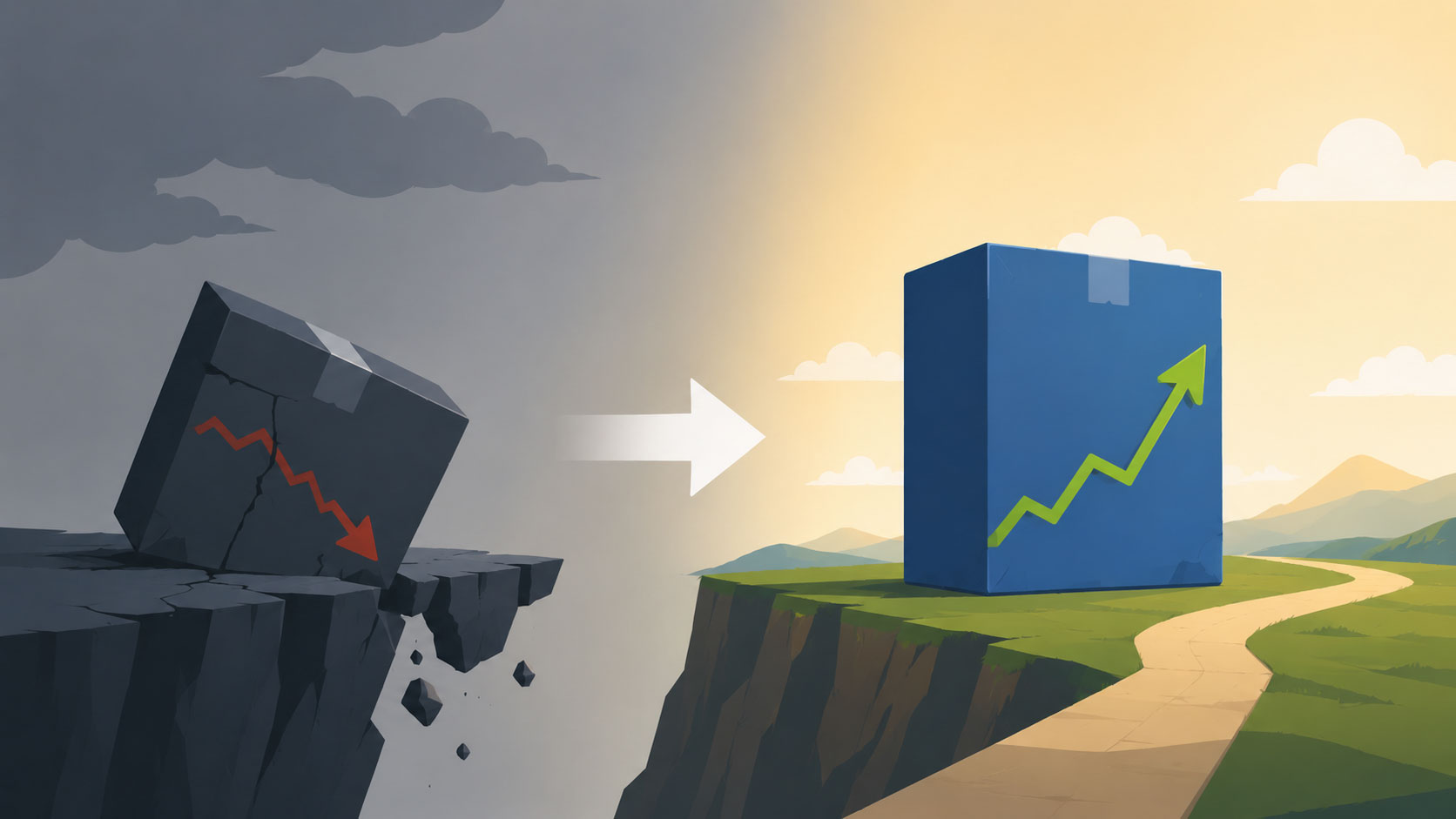
We’ve all seen it: a newly launched product or a legacy service once carried the department but lately, the growth isn’t there. Quarter after quarter, it has missed the revenue target.
In midsize and large companies, these underperformers face a fate worse than cancellation: apathy. Because other lines of business or products in the portfolio are generating revenue, these struggling products are allowed to drift. They fly under the radar, consuming resources while offering minimal revenue contribution. Leadership doesn’t want to kill them because they still have customers, yet leadership is not committed to investing in their growth.
But what if you didn’t give up on them? Imagine your revenue boost in 6 to 12 months if you pivoted that failing product toward sustainable growth.
The Misalignment Trap
When a product underperforms, leadership typically blames the usual suspects:
- Sales isn’t selling enough.
- Marketing is ineffective.
- Pricing is too high.
- The product is too complex.
While these might be symptoms, they are rarely the root cause. The culprit is often misalignment—a fundamental gap between what the customer actually values and what the product delivers. Somewhere along the line, the product stopped solving a customer problem.
Pivoting from “Failing” to “Flourishing”
Turning a product around requires looking at data through a new lens. To bring your product back into alignment, focus on these areas:
- Expose “Hidden” Feedback: Don’t just listen to what customers say—watch what they do. Clearly define the problem they want to solve, how they solve it now, and how they wish they could solve it.
- Diagnose Internal Friction: Audit the handoffs between your departments. Identify the internal gaps—whether between product, sales, IT or operations—that make it difficult to complete an order or close a deal.
- Analyze the Competition: Non-customers have the same problems as your existing customers; they just didn’t choose you. Find out why. What is the competition doing differently? (Hint: It’s rarely just about price).
- Audit Your Value Proposition: Clarify the exact value your product offers. Realign it to target the customer’s deepest pain point, and clearly differentiate your product from competitors.
- Review the Customer Journey: Map the path a customer takes from discovery to purchase. Identify friction points and eliminate them to make buying and using your product seamless.
The Cost of Doing Nothing
The real danger of ignoring an underperforming product is opportunity cost. Every month spent managing a slow decline is a month where those same resources could be used to drive growth.